
Russian Blue Health: Complete Guide to Common Issues, Prevention & Lifespan (2026)
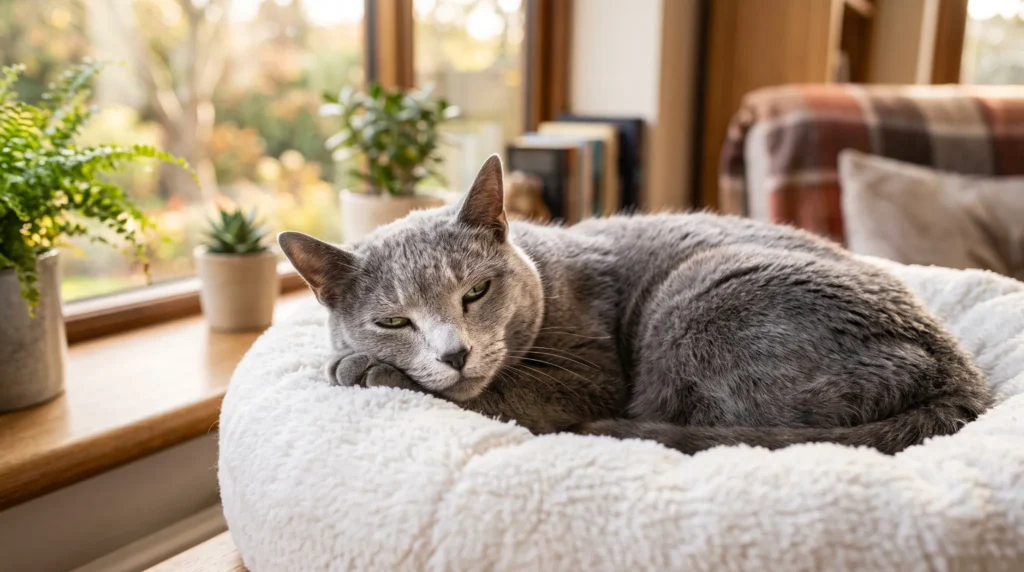
The Russian Blue is one of the healthiest naturally occurring domestic cat breeds, with no breed-specific genetic diseases confirmed by research. Their primary health risks — obesity, dental disease, urinary tract issues, and kidney disease — are largely preventable or manageable with consistent veterinary care, proper nutrition, and an attentive owner. With the right care, a Russian Blue can live 15 to 20 years, sometimes beyond.
People often ask whether the Russian Blue is a healthy breed. The honest answer is: yes, by the standards of pedigree cats, remarkably so.
Unlike breeds developed through selective crossbreeding programs — where desirable traits sometimes come packaged with hereditary vulnerabilities — the Russian Blue is a naturally occurring breed. It evolved over centuries in the harsh northern climate of Arkhangelsk, Russia, without human intervention in its genetic selection. The result is a cat whose immune system, organ function, and physical structure were shaped by survival rather than aesthetics.
That does not mean Russian Blues never get sick. No living creature comes with that guarantee. What it does mean is that the conditions affecting this breed are overwhelmingly preventable or manageable — not the kind of deep-seated hereditary problems that define some other pedigree breeds. Understanding what to watch for, and when to act on it, is the foundation of keeping a Russian Blue healthy for its full potential lifespan.
How Long Do Russian Blue Cats Live?
The standard range is 15 to 20 years for a well-cared-for indoor Russian Blue. Some individuals reach 20 to 22 years. This places the breed among the longest-lived domestic cats.
A Russian Blue that lives in a calm, consistent home, eats measured meals of quality food, sees a vet annually, and has its teeth cared for regularly — that cat has a genuine shot at the upper end of that range. The variables are largely within an owner’s control.
Is the Russian Blue Genetically Healthy?
Yes — with important nuance.
As a naturally occurring breed, the Russian Blue does not carry the confirmed hereditary diseases that affect some purpose-bred cats. There is no breed-specific genetic condition the way Persian cats have polycystic kidney disease confirmed in their lines, or the way Maine Coons have a known HCM gene variant.
What exists for Russian Blues is a category of conditions that appear with some frequency in the breed — not confirmed as genetic, but observed often enough that reputable breeders screen for them and owners should know them. The distinction matters practically: these are not inevitable, but they are worth active monitoring.
The conditions that fall into this category: progressive retinal atrophy in some lines, polycystic kidney disease reported in a subset of cats, and hypertrophic cardiomyopathy at rates that mirror the general cat population. A responsible breeder will have health screening documentation for both parents covering these conditions. Ask for it before purchasing a kitten.
Common Russian Blue Health Issues — What to Watch For
Obesity
This is the most significant health risk for the breed — not because Russian Blues are uniquely fragile, but because the consequences cascade.
Russian Blues are food-motivated in a way that sets them apart from more indifferent eaters. They finish meals quickly, return to the bowl looking for more, and will eat past satiation consistently if given the opportunity. Their indoor, moderate-energy lifestyle means excess calories accumulate rather than burn. Their dense double coat conceals early weight gain — by the time it is visible, the cat may already be meaningfully overweight.
The health consequences of established obesity in this breed are serious: diabetes mellitus becomes four times more likely in overweight cats, joint deterioration accelerates, urinary tract disease worsens, cardiac strain increases, and lifespan shortens. None of this is inevitable. It is entirely the result of feeding management — or the absence of it.
What to watch for: Weight creeping above 12 lbs in an adult, ribs becoming difficult to feel through the coat, reduced willingness to jump or play, a visibly rounded abdomen.
What to do: Weigh monthly. Feed measured portions twice daily. Remove the bowl after twenty minutes. No free-feeding, ever. When weight starts creeping, reduce portions before the gain becomes established — reversing obesity in a sedentary indoor cat is genuinely difficult.
Dental Disease
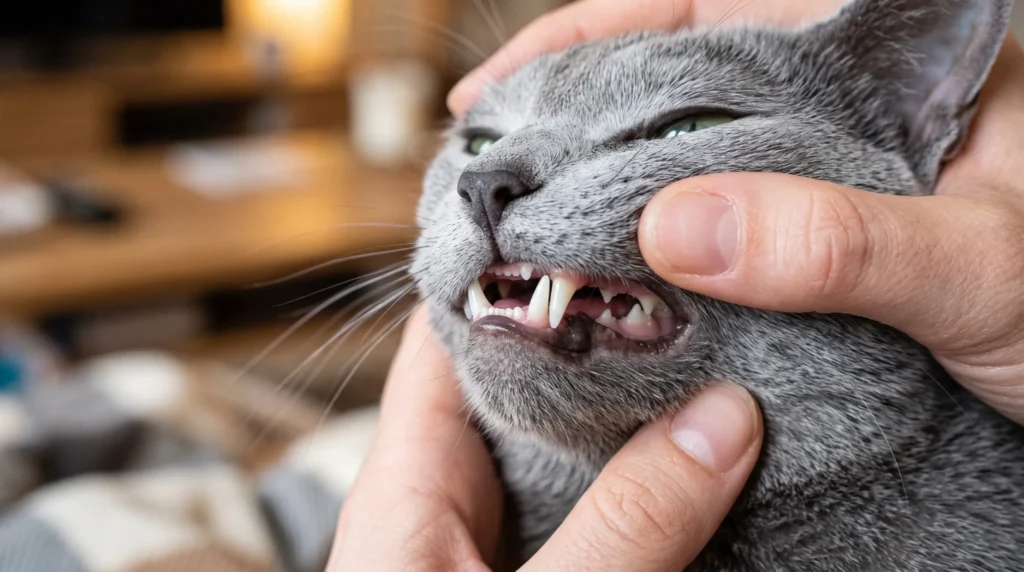
Between 50 and 90 percent of cats over age four develop some form of dental disease according to veterinary estimates — and Russian Blues are not exempt from this figure. Gingivitis, periodontitis, and tooth resorption are the most common forms.
The reason this matters beyond tooth loss: untreated dental infection does not stay in the mouth. Bacteria from infected gums enter the bloodstream and affect the kidneys, liver, and heart over time. Dental disease is a whole-body health issue, not a cosmetic one.
The practical reality is that most owners do not brush their cat’s teeth. The cats that avoid dental disease into old age are the ones whose owners do. This is a controllable variable.
What to watch for: Bad breath that was not there before, drooling, pawing at the mouth, reluctance to eat hard food, visible brown or yellow tartar buildup on the teeth, gum redness at the tooth line.
What to do: Tooth brushing two to three times per week with cat-specific enzymatic toothpaste. Annual professional dental cleaning under anesthesia. Both are necessary — home brushing does not replace professional cleaning, it complements it.
Urinary Tract Disease (FLUTD)
Feline lower urinary tract disease — FLUTD — is a collective term for several conditions affecting the bladder and urethra. In Russian Blues, cystitis and urinary crystal formation appear with notable frequency, likely connected to the breed’s stress sensitivity and the indoor, low-activity lifestyle most of them lead.
The connection between stress and FLUTD in cats is well-established. Stress triggers inflammatory responses that affect the bladder lining, producing the same symptoms as infection — straining, frequent small urinations, blood in urine — without any bacterial cause. This is called feline idiopathic cystitis, and it is the most common form of FLUTD in cats under ten.
For male cats specifically: urinary blockage is a medical emergency. A male cat that is straining at the litter box without producing urine needs to be at a veterinary clinic within hours. A complete blockage can become fatal in twenty-four to forty-eight hours.
What to watch for: Frequent trips to the litter box with little or no urine produced, crying or vocalizing at the litter box, blood-tinged urine, urinating outside the box, excessive genital grooming, lethargy combined with any of the above.
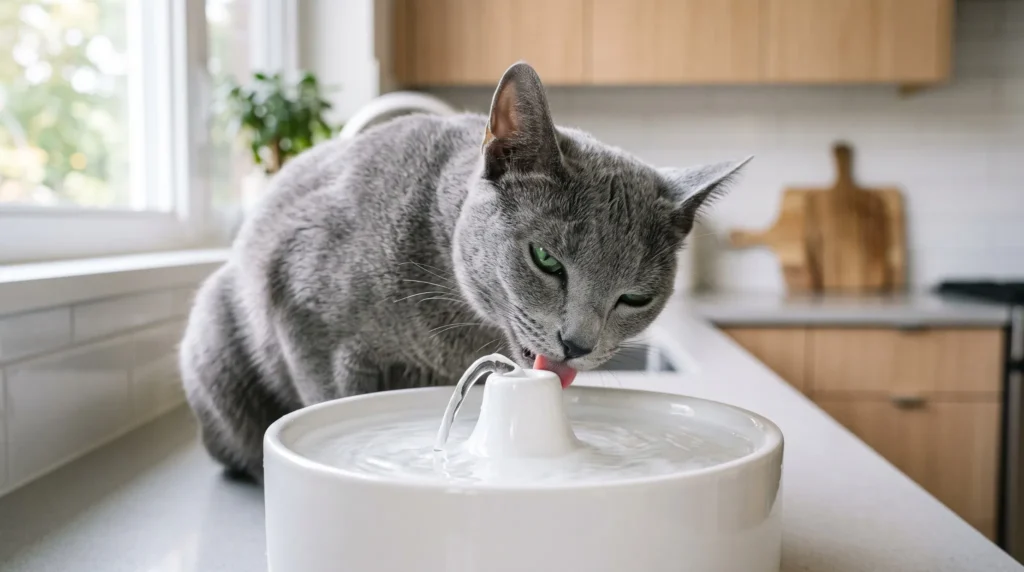
What to do: High water intake is the primary preventive measure — wet food in the diet daily, a pet water fountain, fresh water changed regularly. Stress reduction matters as much as hydration for this breed specifically. Male cat straining without output: emergency vet, immediately.
Chronic Kidney Disease (CKD)
Kidney disease is the most common age-related condition in domestic cats generally, and Russian Blues are not exempt. CKD typically appears in cats over age seven and progresses gradually. The kidneys lose function over time — there is no reversal, but there is significant management.
Early detection matters enormously here. A cat losing 25 percent of kidney function shows no clinical signs. At 75 percent loss, symptoms appear. This means a cat can be in early kidney disease for years before an owner notices anything wrong — which is exactly why bloodwork and urinalysis from age seven onward is not optional care, it is essential care.
What to watch for: Increased water consumption, increased urination, weight loss despite normal or increased appetite, poor coat condition, occasional vomiting, lethargy, reduced appetite in later stages.
What to do: Annual bloodwork from age five to establish baseline kidney values. Twice-yearly blood and urine panels from age seven. Early-stage CKD is manageable with dietary adjustment, phosphorus restriction, hydration support, and sometimes medication. Caught early, a cat with CKD can maintain good quality of life for years.
Hypertrophic Cardiomyopathy (HCM)
HCM — thickening of the heart muscle — is the most common cardiac condition in domestic cats. It affects approximately one in ten cats across all breeds. Russian Blues are not at confirmed elevated risk compared to the general cat population, but the condition is common enough in all cats that owners should be aware of it.
The challenge with HCM is that it often has no obvious symptoms until it has progressed significantly. Some cats develop a heart murmur detectable by a vet before other symptoms appear. Others are diagnosed when respiratory distress develops — a late-stage sign.
What to watch for: Difficulty breathing or rapid breathing at rest, open-mouth breathing, lethargy, reduced exercise tolerance, sudden hindlimb weakness or paralysis (a sign of aortic thromboembolism, a serious HCM complication requiring immediate veterinary attention).
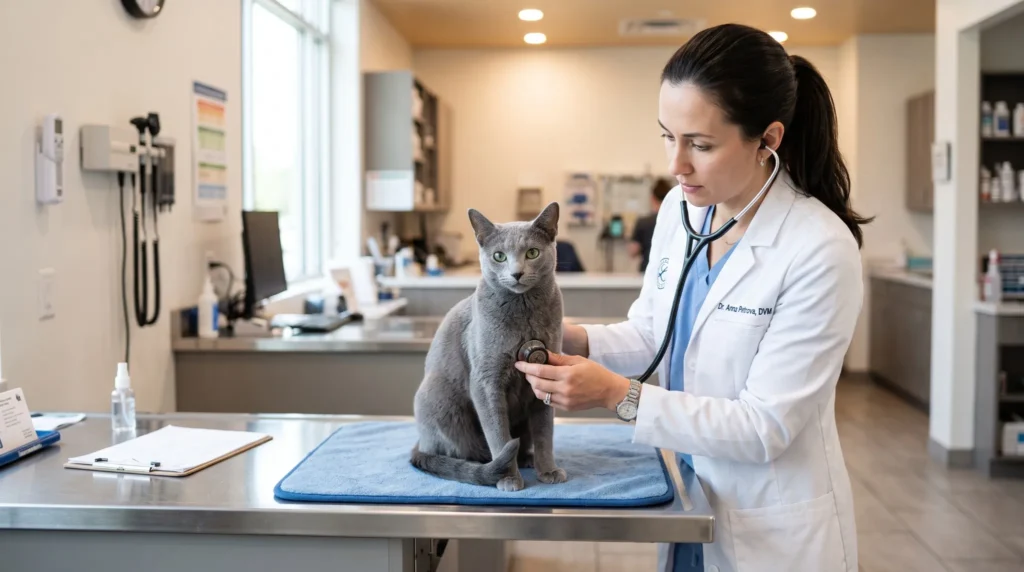
What to do: Annual cardiac auscultation (stethoscope check) at every vet visit. Echocardiogram screening from age five, or earlier if a murmur is detected. A cat diagnosed with HCM is not automatically near the end of its life — with cardiac medication and monitoring, many cats live comfortably for years post-diagnosis.
Progressive Retinal Atrophy (PRA)
PRA is a hereditary condition affecting the photoreceptors in the retina, causing gradual vision loss that eventually leads to blindness. It has been reported in some Russian Blue lines — not confirmed as a breed-wide genetic trait, but present often enough that responsible breeders screen for it.
The condition is painless and progresses slowly. Cats are remarkably adaptable to vision loss in familiar environments — many owners do not notice a problem until it is significantly advanced.
What to watch for: Reluctance to move in low light, bumping into objects in dim conditions (but navigating well in bright light — early PRA affects night vision first), enlarged pupils, increased startle response, general increase in hesitation during movement.
What to do: Ask your breeder for PRA screening documentation on both parents before purchasing a kitten. Report any changes in your cat’s eyes or movement to your vet. There is currently no treatment for PRA, but cats adjust well to blindness in familiar environments with environmental stability — another reason routine and consistent furniture placement matters for this breed.
Hyperthyroidism
Hyperthyroidism — overproduction of thyroid hormone — is primarily an older cat condition, typically appearing in cats over ten. It is common across all domestic cat breeds and Russian Blues are not specifically predisposed, but it is worth including here because the symptoms mimic other conditions and are frequently misread by owners.
An overactive thyroid speeds up metabolism significantly. A hyperthyroid cat often appears to be in good health — eating well, alert, sometimes more active than expected for its age. The internal reality is different: the heart is working too hard, weight is dropping despite good appetite, and organ strain is accumulating.
What to watch for: Weight loss despite increased or normal appetite, increased vocalization especially at night, restlessness or hyperactivity unusual for the cat’s age, increased thirst and urination, poor coat condition, vomiting.
What to do: Blood panel from age seven onward includes thyroid screening. Hyperthyroidism is highly manageable once diagnosed — medication, radioactive iodine therapy, or dietary management are all effective approaches your vet will discuss based on the individual cat.
Russian Blue Health and Stress — The Connection Most Owners Miss
This section exists nowhere else in any competitor guide, and it should.
Russian Blues are one of the most stress-sensitive domestic cat breeds. Their nervous systems respond to environmental disruption — changes in routine, new people, unfamiliar sounds, conflict with other pets, changes in household composition — in ways that have direct physiological health consequences.
This is not a personality quirk. It is a health mechanism.
Sustained stress in cats elevates cortisol, suppresses immune function, and directly increases susceptibility to FLUTD, digestive issues, and upper respiratory infections. A Russian Blue living in a chronically unstable environment — frequent schedule changes, loud unpredictable household, persistent conflict with another pet — will have a different health trajectory than one living in a calm, consistent home. The difference is not small.
Practically, this means:
A consistent daily routine is health care, not just preference management. Feeding the cat at the same time, maintaining the same household layout, keeping play sessions regular — these choices directly affect the cat’s immune function and urinary tract health over time.
When health problems appear in a Russian Blue without obvious cause, always consider the stress environment before assuming the cause is purely physical. A cat developing recurrent cystitis in a household that recently went through significant disruption is telling you something about the connection between its environment and its health.
Preventive Health Schedule — Month by Month
This is the practical tool most health guides skip. Here is what active health monitoring looks like across the year:
| Timing | What to do |
|---|---|
| Monthly | Weigh the cat before a meal, same time, same scale. Feel along the ribcage — ribs should be palpable without pressing hard. Check coat condition. |
| Monthly | Look at the litter box output — both volume and frequency matter. Changes in either are early health signals. |
| Every 2–3 months | Watch for behavioral changes — eating less, drinking more, hiding more, playing less. These precede visible symptoms. |
| Every 6 months (age 7+) | Vet visit with bloodwork panel, urinalysis, blood pressure check, weight assessment, dental evaluation. |
| Annually (under age 7) | Full wellness exam, bloodwork, dental assessment, weight, vaccination update, parasite prevention review. |
| Annually (age 5+) | Cardiac auscultation — listen for murmur. Echocardiogram discussion with vet if any changes detected. |
Early Warning Signs — When to Call the Vet
Russian Blues do not vocalize discomfort loudly. By the time this breed is showing obvious symptoms, a condition has often been developing for some time. Knowing the subtle early signals is the advantage an attentive owner has.
Call the vet within 24 hours if you notice:
- Drinking significantly more water than usual
- Urinating more frequently or in larger volumes
- Weight loss over two to three weeks without dietary change
- Soft stool or vomiting more than once a week
- Reduced interest in food lasting more than 24 hours
- Coat becoming dull or unkempt in a cat that normally self-grooms well
- Any new lump, swelling, or change in skin
Go to an emergency vet immediately if you notice:
- Straining at the litter box with no urine output — especially in males
- Open-mouth breathing or breathing that looks labored
- Sudden hindlimb weakness or inability to use back legs
- Loss of consciousness or seizure activity
- Pale or white gums
- Any injury involving bleeding that does not slow within a few minutes
The Russian Blue cat care guide covers the full daily, weekly, and monthly care routine that supports the preventive health approach described here.
What to Ask a Breeder About Health
If you are purchasing a Russian Blue kitten, these are the specific health questions worth asking before committing:
Ask for documentation, not assurances:
- Have both parents been screened for PRA? Can you see the results?
- Has cardiac screening been performed on breeding cats?
- Is there any PKD history in the lines these kittens come from?
- What is the health guarantee and what does it cover specifically?
A breeder who screens their cats will have paperwork. A breeder who cannot produce documentation may still be entirely legitimate, but the absence of records means you are accepting more health uncertainty. Know that going in.
What good breeders do: They track health outcomes in their lines over multiple generations. They retire breeding cats before age five. They ask you questions too — about your home, your schedule, whether you have other pets. A breeder who wants to know where the kitten is going is one who cares about outcomes beyond the sale.
According to the TICA breed standards and registration requirements, registered breeders are held to ethical breeding guidelines that include health screening expectations. Purchasing from a TICA or CFA-registered breeder provides baseline assurance that the breeder operates within an accountable framework.
Russian Blue Health by Life Stage
Kitten (0–12 months)
Core vaccination series: FVRCP and rabies. Feline leukemia if any outdoor exposure is possible. Spay or neuter discussion with your vet — typically performed at five to six months. Baseline weight recorded and monitored from the first visit.
Start dental habituation early — even just letting the kitten lick cat-safe toothpaste from your finger in the first weeks establishes comfort that makes adult brushing dramatically easier.
Young Adult (1–5 years)
Annual wellness exam with bloodwork. Weight management is the primary active health intervention at this stage. Dental assessment every visit. This is the period when free-feeding mistakes accumulate into obesity — prevention here determines health outcomes at age ten.
Mature Adult (5–10 years)
Begin cardiac auscultation annually from age five. Add bloodwork urinalysis to annual exam to establish kidney baseline before any symptoms appear. Weight management remains critical — the risk of obesity-driven diabetes increases with age.
Senior (10+ years)
Twice-yearly exams become the standard rather than an upgrade. Full bloodwork panel, blood pressure, urinalysis, dental cleaning, joint assessment, thyroid panel. Dietary transition to senior formula in consultation with your vet based on bloodwork, not just age. Monitor water intake and litter box output closely — these are the earliest observable signals of kidney change in a breed that will not vocalize discomfort.
Quality of life monitoring becomes part of health assessment at this stage. A senior Russian Blue that is eating, drinking appropriately, using its litter box, and still engaging with its environment is maintaining good health regardless of age. When multiple of those markers change simultaneously, that is a conversation to have with your vet.
Frequently Asked Questions
Final Thoughts
The Russian Blue’s health advantage is real — but it is not an excuse for passive ownership.
What this breed offers is a starting point with fewer inherited vulnerabilities than many cats. What determines whether that starting point translates into fifteen years or twenty years of good health is overwhelmingly what happens after the cat comes home.
Feed correctly. Manage weight actively. Brush teeth consistently. See the vet on schedule. Keep the home calm. Monitor the litter box and the water bowl more carefully than seems necessary — they will tell you things before anything else does.
A Russian Blue that receives this level of attention has the biological foundation to use it well. That is the honest picture of health for this breed: a favorable starting position and a long runway, for owners who show up consistently enough to use it.